
Stop Pretending the Inbox Is Free
How “quick questions,” messy client inputs, and unpriced follow-up quietly eat engineering margin.

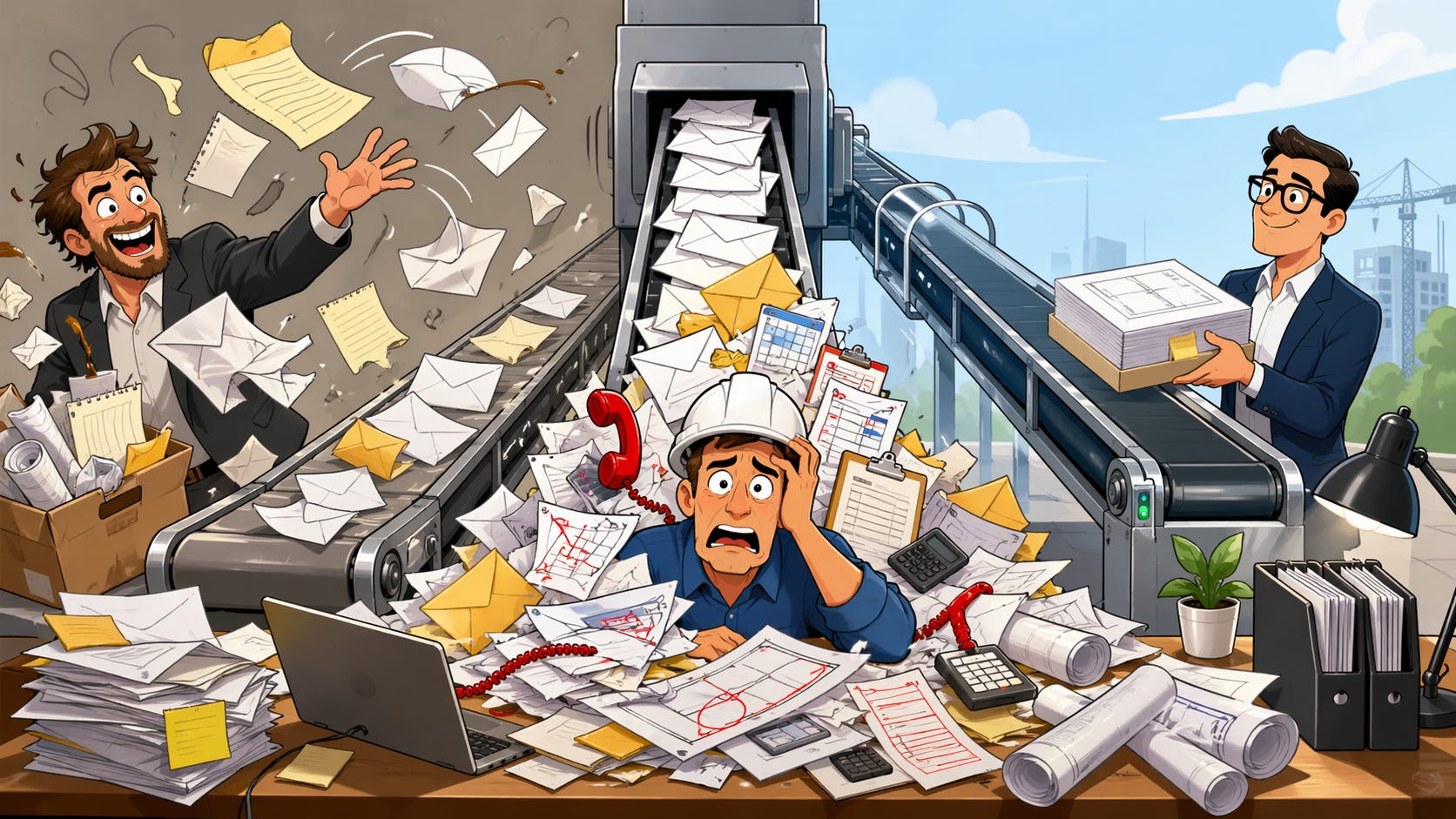
Every client email is not just an email.
Sometimes it is a change order wearing casual clothes.
Construction people know this.
One sentence can move a deadline.
One “quick question” can reopen a design decision.
One missing drawing can force a full reassessment.
One new piece of information can blow up the calendar.
But somehow the industry still treats email like it is free.
It is not.
Every time a client hits send, somebody has to read it, interpret it, decide if it changes the scope, figure out who owns it, check the contract, check the assumptions, check the exclusions, maybe call the client, maybe document the call, maybe price the work, maybe move the schedule, maybe explain why the “small ask” is not small.
Somebody pays for that time. Right now, too often, it is the engineering firm.
Most firms do not have a system for this.
They have inboxes.
They have memory.
They have hallway conversations.
They have a project manager who “knows what’s going on” until they are sick, underwater, distracted, or gone.
Then everyone acts surprised when responsiveness falls apart.
Maybe the team is not lazy.
Maybe the request is loaded.
Maybe nobody wants to touch it because nobody knows:
Is this in scope?
Is this billable?
Is this urgent?
Is this a client-created problem?
Is this going to wreck the schedule?
Is this worth interrupting design work?
That hesitation is where profit goes to die.
We have been building around a simple idea:
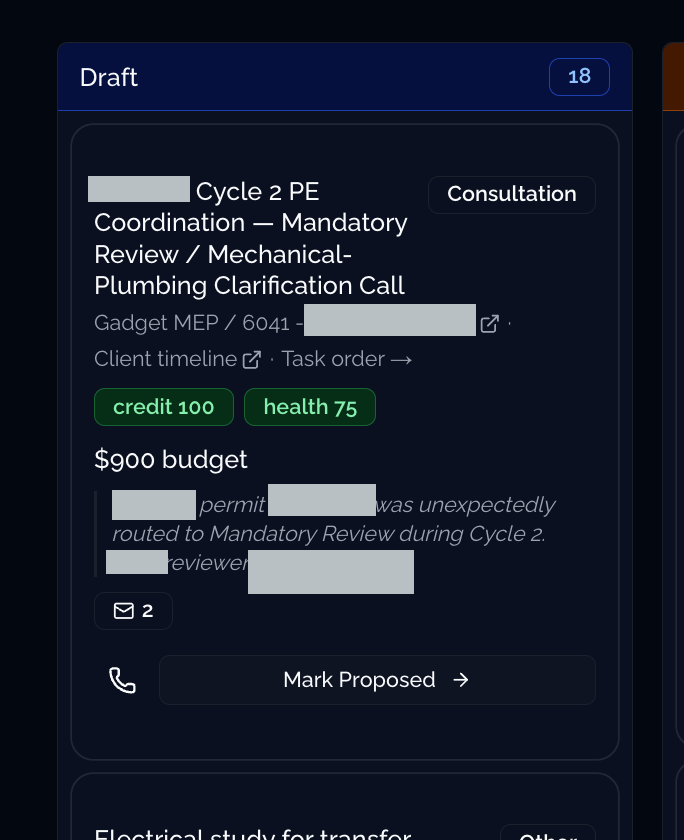
Treat inbound client communication like operational data.
Email comes in.
The system checks the contract, assumptions, exclusions, project context, and prior communication.
It flags whether the request looks in scope or out of scope.
It gives the team enough context to call immediately.
The call gets recorded, transcribed, attached to the project, and turned into next steps.
If it needs a work order, create one.
If it affects delivery, say so.
If the client keeps sending new information after the work is scheduled, the schedule moves.
Fine. That is reality.
Good clients organize their thoughts.
Good clients send complete information.
Good clients understand that every new input has a cost.
The industry already understands this.
They may not call it rate limiting.
They call it a later delivery date.
Same idea.
Send clean information, get cleaner execution.
Send chaos, get delay.
AI will not fix bad client behavior.
But it can finally make the cost visible.
Price the interruption.
Document the call.
Protect the calendar.
Stop pretending the inbox is free.